What Is the Best Way to Prevent Carbon Monoxide Poisoning While Boating
Boaters, Protect yourselves from this Silent Killer: Carbon Monoxide

Blockage of exhaust outlets tin can cause carbon monoxide to accumulate in the cabin and cockpit area -fifty-fifty when hatches, windows, portholes, and doors are closed.

Frazzle from another vessel that is docked, beached, or anchored aslope your gunkhole can emit poisonous carbon monoxide gas into the
cabin and cockpit of your gunkhole. Even with properly vented exhaust, your
boat should exist a minimum of xx feet from the nearest boat that is running
a generator or engine.
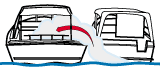
Slow speeds or idling in the water tin cause carbon monoxide gas to accumulate in the cabin, cockpit, bridge, and aft deck, even in an open expanse. A tailwind (force of current of air inbound from aft section of the motorboat) can also increase aggregating.

The "station wagon effect," or backdrafting can cause carbon monoxide to accumulate inside the cabin, cockpit and bridge when operating the boat at a high bow angle, with improper or heavy loading or if there is an opening which draws in exhaust.

This effect can as well cause carbon monoxide to accrue inside the motel, cockpit, aft deck, and span when protective coverings are used and the boat is underway.
Teak surfing, dragging and h2o skiing within 20 feet of a moving watercraft can exist fatal.
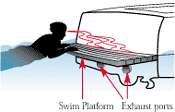
Avert these Expiry Zones!
Pond near or under the dorsum deck or swim platform. Carbon monoxide from frazzle pipes of inboard engines, outboard engines and generators build up within and exterior the gunkhole in areas near frazzle vents. STAY AWAY from these exhaust vent areas and DO NOT swim in these areas when the motor or generator is operating. On calm days, wait at least 15 minutes after the motor or generator has been close off before inbound these areas. NEVER enter an enclosed area under a swim platform where exhaust is vented, non fifty-fifty for a second. It only takes ane or ii breaths of the air in this "decease chamber" for it to be fatal.
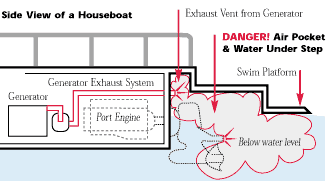
What to practice
- The best precaution against carbon monoxide poisoning is to keep air flowing through the vessel
- Educate family unit and friends virtually carbon monoxide then they are aware of what the early poisoning signs are
- If your gunkhole has rear-vented generator frazzle, check with the boat manufacturer for possible call up or reroute the exhaust to a safe area.
- Assign an adult to watch when anyone is swimming or playing in the water.
- Schedule regular engine and exhaust organisation maintenance inspections by experienced and trained technicians.
- Keep forward-facing hatches open, fifty-fifty in inclement weather, to allow fresh air circulation in living spaces. When possible, run the boat and so that prevailing winds will help dissipate the exhaust.
- Practice not misfile carbon monoxide poisoning with seasickness, intoxication or heat stress. If someone on board complains of irritated eyes, headache, nausea, weakness or dizziness, immediately move the person to fresh air, investigate the cause and take corrective activeness. Seek medical attention, if necessary.
- Install a carbon monoxide detector in each adaptation space on your gunkhole. Check detectors before each trip to be sure they are performance properly. If the detector goes off, believe it!
Facts
Carbon monoxide is a potentially deadly gas produced whatever time a carbon-based fuel, such equally gasoline, propane, charcoal or oil, burns. Sources on your boat include gasoline engines, generators, cooking ranges, and space and water heaters. Cold or poorly tuned engines produce more than carbon monoxide than warm, properly tuned engines.
Carbon monoxide is colorless, odorless and tasteless and mixes evenly with the air. It enters your bloodstream through the lungs and displaces the oxygen your trunk needs. Early symptoms of carbon monoxide poisoning - irritated eyes, headache, nausea, weakness, and dizziness - are oftentimes confused with seasickness or intoxication. Prolonged exposure to low concentrations or very curt exposure to high concentrations can lead to decease.
Each year, boaters are injured or killed past carbon monoxide. Most incidents occur on older boats and within the motel or other enclosed areas. Exhaust leaks, the leading cause of death by carbon monoxide, tin can allow carbon monoxide to migrate throughout the boat and into enclosed areas. New areas of concern are the rear deck near the swim platform with the generator or engines running and teak surfing or dragging backside a slow moving boat. Regular maintenance and proper boat performance can reduce the risk of injury from carbon monoxide.
All carbon monoxide poisonings are preventable!
Checklist - Each Trip
- Educate all passengers about carbon monoxide poisoning.
- Make sure all exhaust clamps are in identify and secure.
- Expect for frazzle leaking from frazzle system components, indicated past rust and/or black streaking, water leaks, or corroded or cracked fittings.
- Inspect rubber frazzle hoses for burned or cracked sections. All rubber hoses should be pliable and free of kinks.
- Ostend that h2o flows from the exhaust outlet when the engines and generator are started.
- Heed for any alter in exhaust sound that could indicate an frazzle component failure.
- Test the operation of each carbon monoxide detector past pressing the test push button. Brand certain the battery is installed properly and is in good condition. Never remove the battery unless replacing it with a new battery
Checklist - At Least Annually
- Supercede exhaust hoses if any evidence of swell, charring or deterioration is plant.
- Audit each water pump impeller and the water pump housing, and replace if worn. Make sure cooling systems are in proper working condition to forbid overheating and burn through the exhaust organization. (Refer to the engine and generator manuals for farther information.)
- Inspect each of the metallic exhaust components for cracking, rusting, leaking or loosening. Pay item attending to the cylinder head, exhaust manifold, water injection elbow, and the threaded adapter nipple betwixt the manifold and the elbow.
- Clean, inspect, and ostend proper performance of the generator cooling h2o anti-siphon valve (if equipped).
Annual Checklist must be performed past a qualified marine technician.
Back to Elevation
mcduffieanall1979.blogspot.com
Source: https://www.boaterexam.com/canada/education/carbonmonoxide-en.aspx
0 Response to "What Is the Best Way to Prevent Carbon Monoxide Poisoning While Boating"
Postar um comentário